
If you’ve ever wondered whether a cherry is a berry, you’re not alone — the question gets searched hundreds of thousands of times a year. The short answer: no, a cherry is not a berry. It’s actually a drupe, which puts it in the same botanical family as peaches, plums, and mangoes.
But here’s where it gets genuinely weird: bananas, grapes, and avocados ARE true berries — and strawberries, raspberries, and blackberries are not. Botanists and everyday English speakers have been using the word “berry” very differently for centuries. Read on for the full breakdown.
True Berries vs. “Fake” Berries — A Surprising Table
Botanically speaking, a berry is a fleshy fruit that develops from a single flower with one ovary and contains seeds embedded in the flesh — no hard pit. By that definition, a lot of common “berries” don’t qualify, and some surprising fruits do.
| Fruit | Commonly Called a Berry? | Botanically a Berry? | What It Actually Is |
|---|---|---|---|
| Cherry | Sometimes | ❌ No | Drupe (stone fruit) |
| Strawberry | Yes | ❌ No | Accessory fruit |
| Raspberry | Yes | ❌ No | Aggregate fruit (drupelets) |
| Blackberry | Yes | ❌ No | Aggregate fruit (drupelets) |
| Blueberry | Yes | ✅ Yes | True berry |
| Cranberry | Yes | ✅ Yes | True berry |
| Grape | Rarely | ✅ Yes | True berry |
| Tomato | Rarely | ✅ Yes | True berry |
| Banana | No | ✅ Yes | True berry |
| Avocado | No | ✅ Yes | True berry (large-seeded) |
| Watermelon | No | ✅ Yes | Pepo (a type of berry) |
| Cantaloupe | No | ✅ Yes | Pepo (a type of berry) |
History of the Cherry
Cherries have been cultivated for thousands of years and probably originated in the area around the Black Sea. Greeks and Romans used them extensively and they soon spread throughout Europe and China.
Early colonists brought cherries to America in the 1600s. Today, over 650 million pounds of cherries are produced commercially in the United States, according to Washington State University. Sweet cherries are preferred for fresh eating, while sour cherries are used for baked goods. Most of the sour cherries grown in the United States come from Michigan. Oregon and Washington are the largest producers of sweet cherries.
Why Cherries Look Like Berries (But Aren’t)
Cherries look like they might be berries — they are soft, sweet, round, and about the same size as a strawberry. They’re often placed next to strawberries in the produce section. And grapes and cherry tomatoes have a similar profile: small, sweet, and round.
But cherries have one seed, like a peach or plum. And that seed is surrounded by a hard stone — the pit. That’s the defining feature that disqualifies them from berry status.
Ask a Botanist: What Is a Drupe?
In botanical terms, berries are a type of fruit — classified as a subset of “simple fleshy fruits.” A berry is defined as a fruit in which the entire pericarp (the wall surrounding the seed) is fleshy, with one or many seeds embedded throughout. The fruit has no core, no hard pit, and is completely edible.
Cherries lack a core, but they do have a pit — a hard seed surrounded by a stony shell. That puts them in a different category entirely: drupes.
The Drupe Family — Cherries’ Real Relatives
A drupe is any fruit with a fleshy outer layer and a single hard seed (stone) in the center. Cherries are in excellent company:
| Drupe | Stone Visible? | Notes |
|---|---|---|
| Cherry | ✅ Yes | Small, round, sweet or tart |
| Peach | ✅ Yes | Fuzzy skin, large pit |
| Plum | ✅ Yes | Smooth skin, oval pit |
| Nectarine | ✅ Yes | Smooth-skinned peach variety |
| Apricot | ✅ Yes | Small, golden-orange |
| Mango | ✅ Yes | Flat, fibrous stone inside |
| Olive | ✅ Yes | Yes — olives are drupes too |
Cherry Love
Whether they are fruits or drupes or berries, cherries have long been admired. Historically, cherries were used for making wine, preserves and baked goods, while the resin of cherry trees was used as a cough syrup or treatment for kidney stones and gout. Children chewed the resin as a chewing gum, as well. Interestingly, cherry pits contain small amounts of cyanide and are poisonous.
The bright red color of cherries comes from antioxidants known as anthocyanins. Researchers believe these compounds can reduce inflammation and cholesterol levels and can ease pain caused by arthritis or gout, according to the Cherry Marketing Association.
Prime cherry season is early-to-mid summer, although most stores carry them year round. Juicy, sweet cherries are a treat anytime.
Frequently Asked Questions
Is a cherry a berry?
No. A cherry is a drupe — a stone fruit with a hard pit in the center. Botanically, a berry must have seeds embedded in fleshy tissue with no hard stone. Cherries don’t qualify.
Is a strawberry a berry?
No. Despite the name, strawberries are accessory fruits — the fleshy part develops from the receptacle of the flower, not the ovary. The tiny yellow seeds on the outside are the actual fruits.
Is a banana a berry?
Yes, botanically speaking. Bananas develop from a single flower with one ovary, and the seeds are embedded in the fleshy tissue (though they’re nearly invisible in cultivated varieties). That makes them true berries.
What exactly is a drupe?
A drupe is a fleshy fruit with a thin skin, a fleshy middle layer, and a hard inner shell (the stone or pit) surrounding a single seed. Cherries, peaches, plums, mangoes, and olives are all drupes.
Are blueberries true berries?
Yes — blueberries and cranberries are among the few common “berries” that are actually berries in the botanical sense. They develop from a single ovary and contain multiple small seeds embedded in the flesh.

This post settled a debate held between myself and several coworkers about the “berry” status of a cherry. Thank you for being a “berry” good source on important information.
Lol
AN AVOCADO IS A BERRY???? From the writer’s own description of a berry – has no core, and is completely edible – ya don’t see that big humongous see in that there avocado???? and it also grows in a tree. or is that an exception? what else is an exception?
what about grapes? confusing.
Here’s a better explanation of why avocado is a berry: http://ucavo.ucr.edu/General/FruitBerry.html
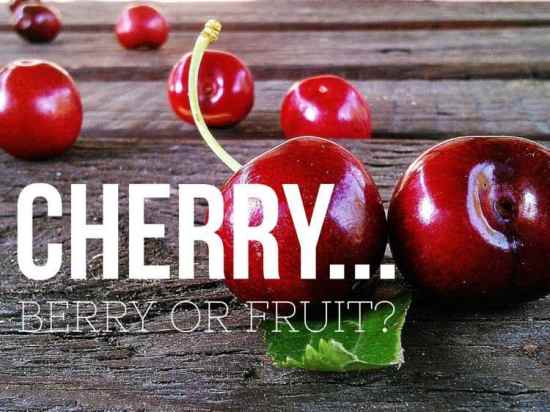
Why does it say “Berry or fruit”? A berry IS a fruit. If it has seeds, it is fruit. It is the fruit of a plant. A berry is a fruit, so you can’t ask if something is a berry or a fruit.
ummm… That article you left has no reasonable explanation for why an avocado is not a drupe, even though they claim it does in the introduction. Call me a dummy, but i have a point. I have yet to see the fleshy exocarp of an avocado. If its fleshy then why do i have to use a knife to cut it open??????
lol
But doesn’t cherry and berry ryhyme…..
So, if a certain det says it’s ok to eat berries, but not other fruits, are cherries a no or a yes?